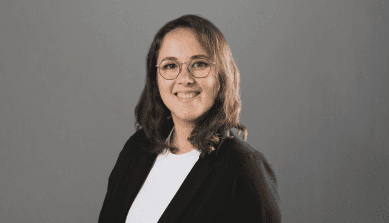

On October 26, 2026, Le Figaro published a profile of Léonie Schröder, CEO and co-founder of HUVY. The daily newspaper looks back at the genesis of this artificial intelligence solution, designed to assist primary healthcare professionals in assessing melanoma risk and streamlining access to dermatology.
HUVY is a CE Class IIb-certified AI solution intended exclusively for healthcare professionals: pharmacists, general practitioners, and nurses. In this profile by Chloé Morand-Bridet, Le Figaro details how a personal family experience and an assessment of healthcare access led to the creation of HUVY. Here are the key takeaways from the article and what they reflect about our approach.
From a family melanoma case to the founding of HUVY
An engineer trained at the Institut Polytechnique de Paris, Léonie Schröder initially specialized in emerging technology adoption within a consulting firm. Her career shifted when Bryan Boulé, future co-founder and CTO of HUVY—specializing in AI and algorithm development—shared the story of a delayed melanoma diagnosis within his own family.
As the daughter of physicians, Léonie Schröder was struck by the lack of resources available to healthcare professionals in the wake of the COVID-19 pandemic. She told Le Figaro that this experience inspired her to dedicate her work to "useful and impactful innovation for society."
Dermatology access under strain
Upon investigating the issue, both co-founders observed that this case was far from an isolated incident. Léonie Schröder summarized the imbalance between patient demand and healthcare supply for Le Figaro: according to her, one in two patients foregoes consultation, with approximately 3,000 dermatologists serving 70 million French citizens.
This observation gave rise to the idea of equipping primary care professionals with a decision-support tool for melanoma risk assessment.
How HUVY works
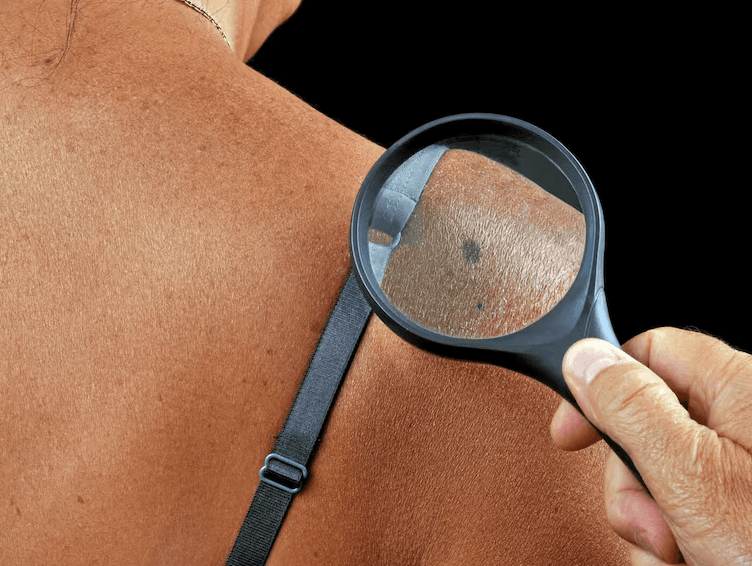
HUVY is accessible via a web application. The pharmacist, general practitioner, or nurse captures an image of the lesion using a dermatoscope connected to HUVY. Within seconds, the AI assesses the melanoma risk level, indicated by a color-coded output (green, amber, or red).
The algorithm was trained on a dataset of over 100,000 lesion images, including both benign lesions and confirmed melanomas. It does not provide a definitive diagnosis: the healthcare professional analyzes the result, integrates it into their clinical examination, and remains the sole decision-maker regarding patient management.
A dual benefit for patients and healthcare professionals
The article underscores a core objective: ensuring this technology remains in service of human expertise and never replaces the healthcare professional. Léonie Schröder advocates for a "dual benefit":
expedited care pathways for patients at risk of melanoma;
optimized time management for dermatologists, enabling them to focus on patients who most require their specialist expertise;
an expanded role for community healthcare professionals, empowered with a tool to act at the primary care level.
The ultimate goal, she concludes, is to "give time back to patients to minimize delays in the diagnostic journey."
Robust clinical evidence and regulatory compliance
HUVY is a CE Class IIb-certified medical device (EU Regulation 2017/745). Its clinical performance was evaluated in multicenter studies conducted with the University Hospitals of Nantes and Lyon across more than 3,000 lesions, demonstrating 96% sensitivity and 72% specificity. These results were published in the Journal of the European Academy of Dermatology and Venereology (JEADV 2025).
Recognition for healthcare innovation
Last year, Léonie Schröder was named among the honorees of the French healthcare innovation talent awards by Acteurs de la French Care, exclusively published by Le Figaro Magazine. Le Figaro also announced that she will be featured as the "Editor's Choice" at its upcoming Big Bang conference dedicated to appearance and self-care.
Read the full article: Léonie Schröder: Combining artificial intelligence and skin health, Le Figaro, October 26, 2026